Thursday, 28 October 2010

Smoked mackerel páté


I was not so keen to try any fish páté since I had trauma from my childhood when somebody fed me with fish pate on a summer camp. It was made from... I do not know and I prefer not to. Sometimes ignorance is bliss. However some time ago I saw smoked mackerel and I had to buy it. I did not know what I am going to make, but it was one of those moments that I could not resist the feeling of buying something.

I found a lovely recipe from Jamie Oliver on Daily Mail website, but I am unable to find it at the moment, I think it was removed. It was a Christmas party crowd pleaser and he made a huge amount of it, so I decided to make half of it. Few days later I rushed to the local market to get some more smoked fish. It was the best mackerel páté I have ever tried.

I have to admit I hesitated for a moment with a horseradish, so I added half of it but after I tasted it I decided to go for the whole amount because it was the horseradish that gives it a special kick.


I used the following quantities, but if you planning a party, do not hesitate to double it.

400g smoked mackerel
190ml soured cream
3 tsp horseradish
zest and juice of one lemon
big handful of fresh parsley, chopped
freshly ground black pepper

Remove skin from the mackerel and mash the flesh with a fork. Add cream, horseradish, pepper, most of the lemon zest, whole lemon juice and most of the chopped parsley. Mix it all together.

Serve on slices of grilled read, topped with some parsley and lemon zest.

Monday, 25 October 2010

Moroccan style chicken & sweet potato mash


Following my recent recipe for harissa I am going to show you a whole dish that you can cook for dinner using this hot chilli sauce. My choice was quite obvious and natural - a dish inspired by North African cuisine.

When we went to Morocco last year we were delighted with everything we tried. The food is fantastic, mouth watering, aromatic and spicy - I don't mean hot, but it has a lovely aroma and flavour coming from different herbs and spices. Sometimes we did not have to do anything but close our eyes and breathe this lovely aromas in. It was enough to get close to the culinary ecstasy.

I would recommend Moroccan cuisine to any food lover, but it is better to try dishes from small restaurants or meals made on streets or markets as it taste better than safe menu prepared for an average European tourist in hotels. This is how you get a true local taste.

I haven't got a traditional tagin dish but I have prepared something inspired by North Africa cuisine with some Moroccan influences. I like when aroma of the spices fills up our cottage, especially when it is cold outside. It brings the warmth to our hearts and stomachs.

I have found a recipe in "Good Food", October 2010 issue, but I have changed it, so this is how I made it:


serves 2


2 chicken breasts, skinless, boneless(you can use any chicken pieces with bones, but it will take longer to cook it)
1 level tsp harissa
2 tbsp neutral olive oil
1 onion, peeled, halved and sliced
1 garlic clove, peeled and finely chopped
1 large tomato, peeled, deseeded and roughly chopped
about 200ml vegetable or chicken stock
8 whole dried apricots
handful whole, black olives
tsp honey
1/4 tsp ground cinnamon
salt
freshly ground black pepper

some chopped parsley or coriander to garnish

Spread the harissa over the chicken and leave it in a fridge to marinate for whole day or at least for two hours before cooking.

In a pan heat 1 tbsp olive oil and fry the chicken on both sides until seared. Remove from the pan and set aside.

Heat the remaining oil in the pan and fry the onions for about 3 minutes, until slightly softened and add garlic. Fry for another minute or so, next add tomato, stock, honey, cinnamon and return the meat into the pan. Add apricots, season with some salt and pepper, cover and simmer for about 15 minutes. Next add the olives and simmer for another 5 minutes.

Serve sliced with some sauce and

Sweet potato mash


serves 2


2 large sweet potatoes, peeled and diced roughly
salt
pinch of freshly ground nutmeg
1 tbsp neutral olive oil

Boil the potatoes in a pan of salted water until soft. Drain well, return to the pan with oil and nutmeg and mash until smooth.

I served it sprinkled with some chopped parsley but I think some fresh chopped coriander would be even better.

If you are looking for something else inspired by Moroccan cuisine click here.

Sunday, 24 October 2010

Upcomming review!

CSN Stores has over 200 online stores where you can find everything from wardrobes to fantastic fitness equipment to cookware. Stay tuned to find out what was my recent choice and how I am going to use it. It will be good looking, tasty, comforting and seasonal. Wicked - believe me!

Thursday, 21 October 2010

Harissa


Few years back when I use to read about standards required in Michelin stars restaurants I was bit shocked. But then after few years I totally understand why all of those standards are so high. I use to think that chopping vegetables into equal pieces or spending time on making your own pastry is a bit of a waste of time and called it quite obsessive.

Professional Michelin inspectors anonymously visit restaurants evaluate them on a range of criteria. If they are impressed by a restaurant, they visit the establishment again. And again. Quite an obsessive research, isn’t it? This actually makes the Michelin stars restaurants such a reliable place to eat. No matter what the occasion, time of the year you will always find the best food in those places. Also, I believe that you will remember this meal for long…

It is not only the prestige of the place that comes with Michelin stars but also a big money – the restaurants can be fully booked months in advance.

Now after few years of cooking at home, learning new skills, tasting menus from different chefs I know exactly that those small things make a huge difference. These things are taking dishes to the new exciting level.

I know that sometimes it is difficult to find time to make your own puff pastry, pesto or real stock and we use some bought, ready – made. It is OK, but it certainly brings the taste down. No matter how expensive the stuff from the shops is, the homemade one is always better.

Call me snob, or obsessed but I prefer to make my own pesto, pastry or stock. This is what makes my guests think “WOW” when they try my dishes. Perhaps this is something that you cannot name, you are not sure what it is, but you can tell that it makes big difference to the taste. It is important for me, because I eat not only to satisfy a hunger…

Taking all the above into a consideration I stopped buying ready made harissa and made my own, that was much better than any from a jar that I tried before. This hot chilli sauce is commonly eaten in North Africa and Middle East. It is great with any meat dish, if you like hot dishes, excellent with veg too – especially with lentils or beans dishes.


From “Good Food”, September 2010 issue

Makes about 5 tablespoons


10 fresh red finger length chillies
1 ½tsp coriander seeds
½ tsp cumin seeds
½ tsp caraway seeds
3 garlic cloves, peeled and roughly chopped
½ sea salt, preferably flaked
2 tsp tomato puree
2½ tsp lemon juice
1 tbsp olive oil (mild, not extra virgin, as it will overpower the taste of other ingredients)
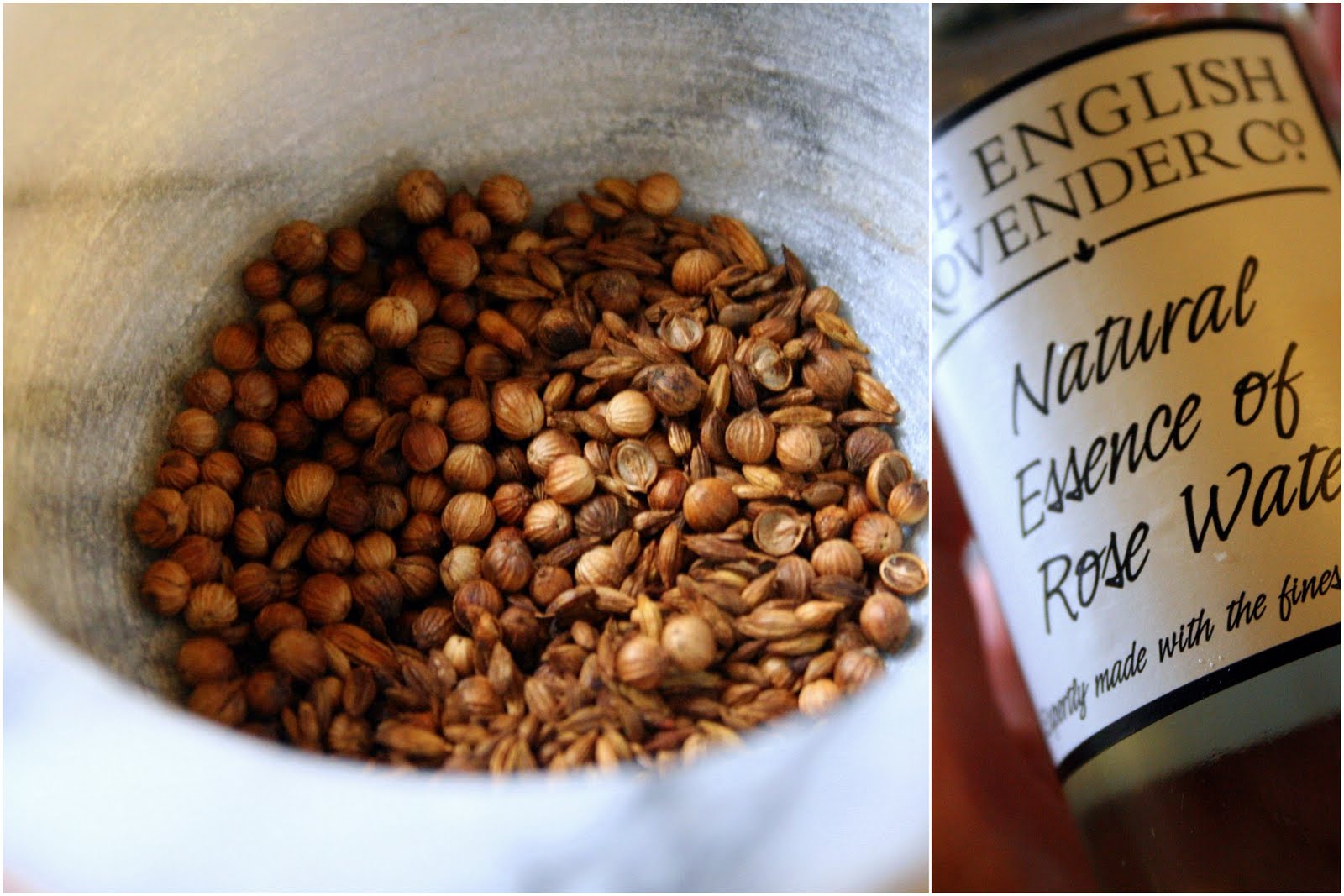
7 drops rose water (optional, but highly recommended!)

Place frying pan over a medium heat and char the chillies turning them now and then until fairly blackened and covered in “blisters”. Remove from a pan, place in a plastic bad, seal it and leave it to cool down slightly, for about 10 minutes.

In the same frying pan over a low heat gently toast the cumin, caraway and coriander seeds, for about 2 minutes, tossing them, until fragrant. Place in a mortar and smash with pestle.

Peel away the skins from chillies and deseed them. I recommend you use a latex gloves or wash your hands with oil and then with water and soap to avoid any nasty consequences (especially man – do not be tempted to do this job and go to the toilet without washing your hands carefully). Capsaicin from chillies is hydrophobic, so you cannot wash it away using water, but you can do so using alcohol or oils. This is why you should rub some oil into your hands before washing them with water and soap.

With a pestle and mortar pound the chillies, spices, garlic and salt together until as fine as possible. Stir in tomato puree, lemon juice and rose water and allow flavours to combine for at least one hour before using.

Unfortunately the magazine did not tell us how long we can keep this refrigerated. I am keeping mine for 2 weeks now and everything looks and tastes OK. I would think it will last long if covered with layer of oil. I would try to freeze it in ice container, to make small cubes – each for single use.

If harissa is to hot for you make it milder by adding more olive.

Tuesday, 19 October 2010

Butternut squash ravioli with sage butter


If you are already bored with the squash this is not the best post for you, as today I am going to show another recipe using this lovely vegetable. For last few years this queen of October veg was tempting me to make lovely filling and use it to make the homemade ravioli. Squash filling? No problem. Homemade ravioli? Not exactly that exiting. (I thought)

I was not really keen to make my own ravioli until I have made my own first pasta and fought my culinary demon not long time ago. I have pasta maker. I have the butternut squash. I certainly haven’t got homemade pasta demon anymore. What shall I do? Squash ravioli perhaps?

The outcome was delicious. Even if my kitchen looked like after the Armageddon and my big toe hurts because when rolling the dough somehow (I still do not know how though…) I managed to pull out the handle and drop it straight onto my toe. Anyway, ravioli were worth it…


Serves 4


Dough

220g pasta flour, '00' type
2 whole eggs in room temperature
1 egg yolk
pinch of salt

Sieve the flour into a bowl, then turn into a mound onto a clean surface and make a well in the middle. Sprinkle the salt into a well and then crack in the eggs and egg yolk.

You can have a bowl of water on the side, so you can wet your hands to help bring the dough together if it getting too difficult towards the end of kneading.

To begin brake the egg yolks with your fingertips and then begin to move your fingers in a circular motion, gradually incorporating the flour until you have worked in enough to start bringing in together in a ball. The you start to work the ball of dough by pushing it with the heel of your hand, then folding the top back to itself, repeating again and again.

To make the dough you have to spend a good 10 minutes on kneading, the dough should come together and feel quite stiff. However it is no good to overdo the dough. You need to leave it in damp cloth for about 1 hour to rest and it will become softer.

Filling

half medium butternut squash, deseeded and left in skin
tbsp olive oil
3 tbsp freshly grated parmesan
2 tbsp bread crumbs
about 30g walnuts
1 egg yolk
pinch of freshly gated nutmeg
half tsp of fennel seeds, crushed in a mortar
salt freshly ground black pepper

Preheat the oven to 180C. Place the butternut squash on a roasting tray, drizzle with olive oil and roast until the flesh is soft. Remove from the oven and set aside to cool down. When cooled down remove the flesh from the skin with spoon.

Place the walnuts, all spices and pumpkin in a food processor and mix until smooth. Next ad bread crumbs, parmesan, egg yolk and adjust the seasoning. Place in a fridge and roll the dough.

Divide the dough into 4 pieces, and roll one at time using a rolling pin first so it is not too thick when rolling in the machine, about 1 cm thick is enough. Put the machine of the thickest setting and start rolling. You have to support the rolled dough with you hand so it will not fold or stick. Change to next setting and roll again. Repeat another 2-3 times taking the setting down every time.

Next fold the pasta onto itself, put the machine into first setting and put the pasta through. Repeat 2-3 times, changing the setting to thinner. If you feel the dough is too sticky dust with very little flour.

When you have two sheets of pasta ready place one of them on a floured surface and place a tablespoon of the filling in equal intervals, about 2.5cm from the edges. I used an ordinary freezing bag – I placed some filling in the bag, fold it and cut one of the corners so it looked like an icing bag – it is easier to squeeze the filling onto the pasta rather than placing by spoon. Then brush the pasta with little water around the filling.

Fold over the top half of the dough and, working from the centre of the line outwards, press firmly around each pile of filling with your fingers to push out any trapped air and seal in the filling.

Trim off the edges with sharp knife or pastry cutter or fluted pasta wheel. Repeat with the remaining pieces of dough.

Bring a large pan of salted water to the boil. Place ravioli in the pan, about 8 at once and let it boil for about 4-5 minutes. Drain with slotted spoon and place on the plates.

Melt some butter in a large frying pan until foaming, add the sage and fry for a few seconds. Remove from the heat and add few drops of lemon juice. Pour the butter over a ravioli, season with salt and pepper and sprinkle with some parmesan. Serve immediately.